
Eco-Friendly Dog Products
Discover sustainable dog food, natural toys, biodegradable accessories, and low-waste essentials for a greener dog lifestyle.

Choose a topic
Start with the part of eco dog ownership you care about most, then come back to the full guide below.
Eco Dog Food
Organic, human-grade, plant-based, and sustainably sourced food options.
Explore dog foodSustainable Toys
Natural rubber, hemp, recycled fabric, and safer long-lasting toy picks.
Explore toysBiodegradable Accessories
Poop bags, collars, leashes, bowls, and other low-waste daily essentials.
Explore accessoriesNatural Grooming
Gentle shampoos, non-toxic ingredients, and more sustainable grooming routines.
Explore groomingEco Dog Beds
Recycled fill, organic fabrics, durable materials, and better bedding choices.
Explore bedsLow-Waste Living
Practical ways to reduce waste while still caring well for your dog every day.
Explore low-waste tipsThe Complete Guide to Eco-Friendly Dog Products
Eco-friendly dog products can help reduce waste, cut down on unnecessary plastics, and support brands that use safer ingredients and better materials. The goal is not perfection. It is making smarter swaps over time.
The best products usually combine three things: durability, lower-impact materials, and real usefulness for your dog. A toy that lasts six months is often more sustainable than a “green” toy that breaks in three days.
What makes a dog product eco-friendly?
- Recycled, renewable, biodegradable, or certified non-toxic materials.
- Less plastic and better packaging choices.
- Durability, so the product does not need constant replacing.
- Ingredient transparency and credible certifications.
Best places to start
The easiest swaps are often poop bags, toys, shampoo, and treats. These are familiar, affordable, and usually easier to replace than bigger-ticket items.
How to avoid greenwashing
Be cautious with vague claims like “natural,” “green,” or “earth-friendly” if the brand gives no proof. Look for real certifications, clear materials, and transparent ingredient lists.
Frequently asked questions
Are eco-friendly dog products more expensive?
Sometimes, yes — but longer-lasting products often reduce replacement costs over time.
Which swap should I make first?
Start with accessories and toys, then move into food, grooming, and larger product categories.
Do I need to switch everything at once?
No. This niche works best when you help readers make realistic step-by-step upgrades.

Every choice you make for your dog has a ripple effect — on your pet’s health, on your household, and on the planet we share. The global eco-friendly pet products market was valued at $16.8 billion in 2025 and is projected to reach $38.6 billion by 2034, growing at a CAGR of 9.7% — proof that millions of dog owners are already voting with their wallets for a cleaner, greener future. This guide covers everything you need to know about eco-friendly dog products, from food and toys to grooming and beds, so you can make confident, informed choices without the guesswork.
Quick Navigation
- Eco-Friendly Dog Food
- Sustainable Dog Toys
- Biodegradable Dog Accessories
- Natural Dog Grooming Products
- Eco-Friendly Dog Beds & Furniture
- Quick Comparison Table
- What to Look for When Buying Eco Dog Products
- Frequently Asked Questions
Eco-Friendly Dog Food
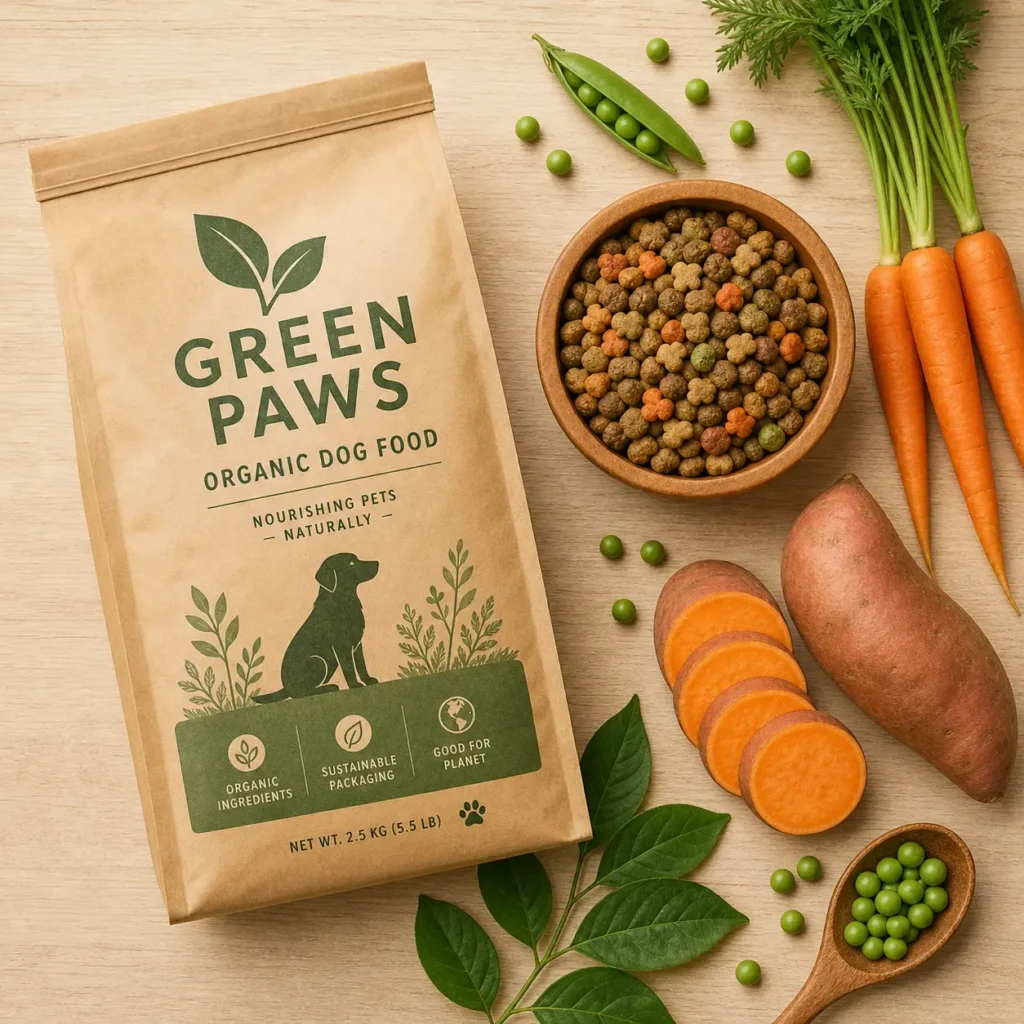
What your dog eats is arguably the single biggest lever you can pull for sustainability. A 2025 peer-reviewed study found that the average dog in the US consumes the equivalent of 20 farmed land animals annually through their diet — which means the ingredients in your dog’s kibble carry a real environmental cost. Eco-friendly dog food takes a different approach: it prioritizes sustainably sourced proteins, organic farming practices, and responsible packaging to reduce that footprint significantly.
What Makes Dog Food Truly Eco-Friendly?
Ingredients are the starting point. Look for foods made with USDA Certified Organic ingredients — this means no synthetic fertilizers, chemical pesticides, or GMO crops. Brands like Castor & Pollux Organix source free-range organic chicken and produce their recipes in certified organic kitchens in the United States. Beyond organic, some forward-thinking brands are incorporating sustainable protein alternatives — including plant-based proteins, insect meal, and cultivated meat — that generate dramatically lower greenhouse gas emissions than conventional beef or chicken.
Supply chain transparency matters just as much as the ingredient list. A brand that sources proteins as by-products from the human food chain (organ meats, trimmings) is actively reducing food waste and avoiding the environmental cost of raising animals purely for pet food. Ask whether a brand publishes a sustainability report, discloses its sourcing partners, or carries third-party certifications that verify its claims.
Packaging is the final piece of the puzzle. Recyclable cans, compostable pouches, and bulk-buying options all reduce the landfill impact of feeding your dog week after week. Smaller, concentrated formulas that require less packaging per serving are another smart option to look for.
Key Eco-Friendly Dog Food Certifications to Look For
- USDA Organic — verifies organic ingredient sourcing
- Non-GMO Project Verified — ensures no genetically modified organisms
- B Corp Certification — signals company-wide environmental and social accountability
- AAFCO Statement — confirms nutritional completeness (non-negotiable for any dog food)
→ See our full roundup: Best Eco-Friendly Dog Food Brands
Sustainable Dog Toys
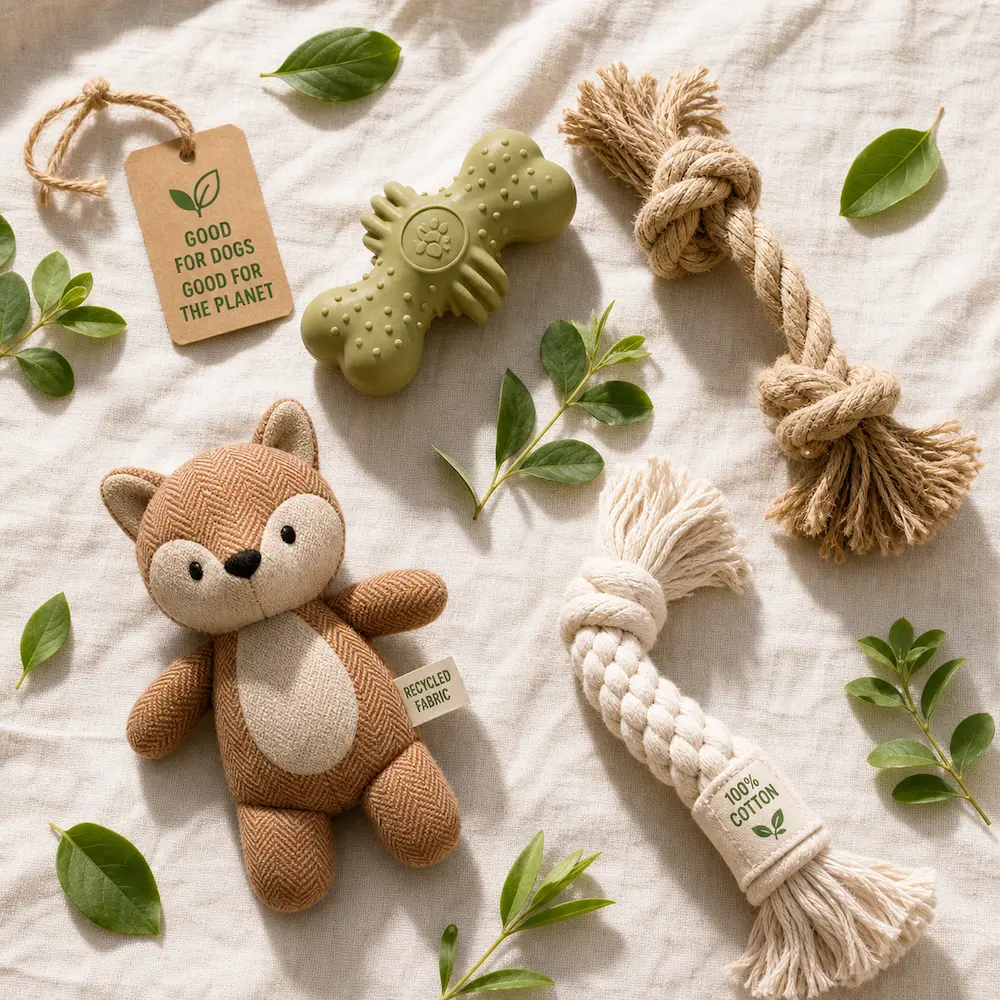
If you’ve ever watched your dog destroy a flimsy plastic toy in under 10 minutes — and felt a pang of guilt tossing the broken pieces in the trash — you’re not alone. Conventional dog toys are often made from virgin plastic, synthetic rubbers, and chemical dyes that can leach toxins and contribute to microplastic pollution. Sustainable dog toys flip the script: they’re made from materials that are safer for your dog and gentler on the environment.
The Best Eco-Friendly Materials for Dog Toys
Natural rubber is the gold standard for chew toys. Harvested from rubber trees, it’s biodegradable, highly durable, and free from the synthetic additives found in cheaper alternatives. For dogs who are heavy chewers, a well-made natural rubber toy will outlast several plastic ones — which means fewer replacements and less waste.
Hemp rope is another excellent choice, especially for tug and fetch toys. Hemp is a fast-growing, low-pesticide crop that requires minimal water and no synthetic fertilizers. As a bonus, the natural fibers can act as a gentle dental floss for your dog’s teeth as they chew and tug.
Recycled fabric and recycled plastic toys give old materials a second life. Many brands now use post-consumer recycled plastic bottles (rPET) to create plush toys and interactive puzzles. While these aren’t biodegradable, they divert waste from landfills and reduce demand for virgin plastic production.
What to Avoid
- Vinyl (PVC) toys — can contain phthalates and heavy metals
- Toys with synthetic dye coatings (especially bright colors) with no safety certifications
- “Eco-labeled” toys made from bamboo composites — often contain binding resins and are marketed as natural without being fully biodegradable
→ See our full review: Best Sustainable Dog Toys
Biodegradable Dog Accessories
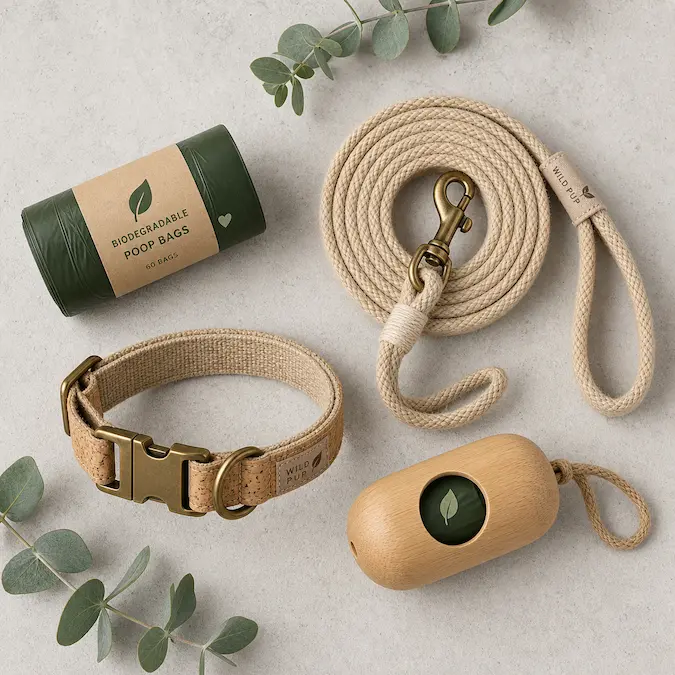
From the leash on your dog’s neck to the bag you use to clean up after them on your morning walk, accessories are an area where small swaps add up to meaningful impact over a year. The compostable and biodegradable dog poop bags market alone is projected to expand at a CAGR of 10.1% through 2033 — a clear sign that demand for greener everyday accessories is surging.
Biodegradable Poop Bags
Not all “biodegradable” bags are created equal — a critical distinction we cover in the FAQ below. Look for bags certified as compostable to EN 13432 or ASTM D6400 standards, which ensures they break down in industrial composting conditions within a defined timeframe. Plant-based bags made from cornstarch or cassava are the most common eco-friendly options on the market. Avoid bags that merely claim to be “degradable” without certification, as these may still leave behind microplastics.
Eco-Friendly Leashes & Collars
Recycled webbing leashes — made from post-consumer plastic bottles woven into strong, weather-resistant straps — are one of the fastest-growing sustainable accessory categories in 2026. They’re just as durable as conventional nylon leashes and available in a wide range of styles. For collars, look for options made from organic hemp, recycled polyester, or cork — materials that are durable, naturally antimicrobial, and have a lower environmental footprint than virgin synthetic fibers.
Hardware matters too. Stainless steel or solid brass buckles and D-rings last far longer than their zinc-alloy alternatives, reducing replacement frequency and waste. Some brands now offer leashes and collars with fully natural, compostable components — though durability should always be verified before committing.
Quick Checklist: Green Accessories
- Poop bags: EN 13432 or ASTM D6400 certified compostable
- Leashes: recycled webbing (rPET) or organic hemp
- Collars: organic hemp, natural cork, or recycled polyester
- Hardware: stainless steel or solid brass for longevity
→ See our full guide: Best Biodegradable Dog Accessories
Natural Dog Grooming Products
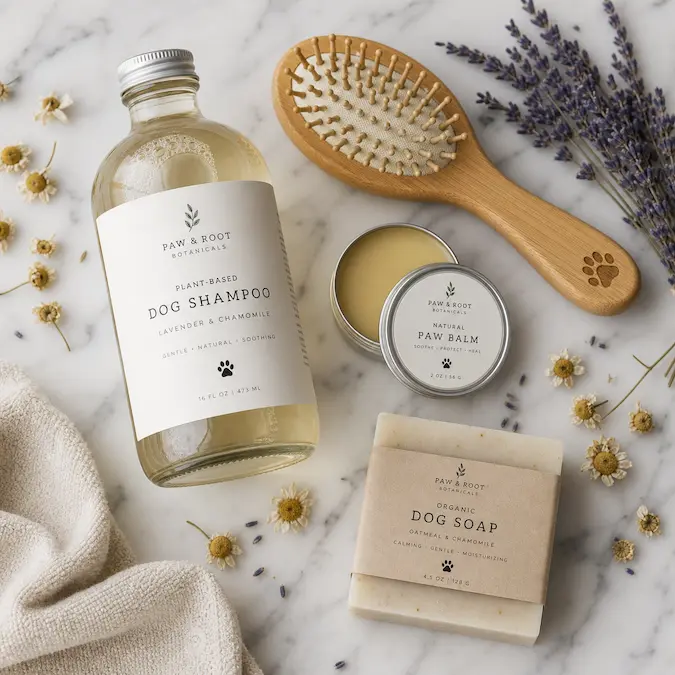
Your dog’s skin is more sensitive than yours. Dogs have a thinner, more alkaline skin barrier — which means that harsh chemical ingredients found in conventional grooming products can strip natural oils, cause irritation, and trigger allergic reactions far more easily. Natural dog grooming products avoid the worst offenders and replace them with plant-derived, biodegradable alternatives that clean effectively without the chemical load.
Ingredients to Avoid in Dog Shampoos
The grooming product aisle is full of “natural” and “gentle” labels that obscure problematic ingredient lists. Here’s what to actually scan for:
- Sulfates (SLS & SLES) — sodium lauryl sulfate and sodium laureth sulfate are aggressive foaming agents that dry out skin and cause irritation, particularly in dogs with allergies or sensitive coats
- Parabens — preservatives linked to hormonal disruption in animals
- Artificial fragrances and dyes — can contain hidden phthalates that interfere with endocrine function
- Formaldehyde-releasing preservatives — found under names like DMDM Hydantoin, Imidazolidinyl Urea, and Quaternium-15; these slowly release formaldehyde over time and cause skin irritation
- Mineral oil — coats the skin, prevents toxin elimination, and interferes with natural oil production
What Genuinely Natural Grooming Looks Like
The best eco-friendly dog shampoos use sulfate-free cleansers derived from coconut or sugar cane, naturally preserved with vitamin E or rosemary extract, and scented with certified organic essential oils in safe concentrations. USDA Certified Organic grooming products must meet strict standards for ingredient sourcing, making that certification one of the most reliable signals in the category.
Packaging is the other dimension of sustainability in grooming. Look for concentrated formulas in aluminum bottles, glass containers, or compostable pouches — all of which eliminate single-use plastic waste from your routine. Shampoo bars are an especially zero-waste option that skips liquid packaging entirely.
→ See our full review: Best Natural Dog Shampoos
Eco-Friendly Dog Beds & Furniture
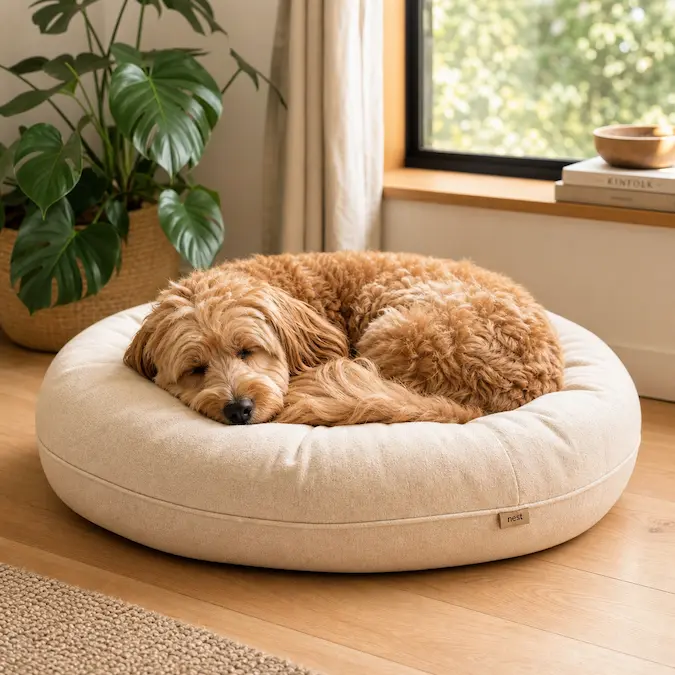
A dog spends roughly 12–14 hours a day sleeping — which makes their bed one of the highest-contact products in your home. Conventional dog beds are typically stuffed with virgin polyester fiberfill, covered in synthetic fabrics treated with chemical fire retardants, and packaged in layers of single-use plastic. Eco-friendly alternatives take a fundamentally different approach, using certified organic materials and recycled fill that are safer for your dog and significantly easier on the environment.
Materials That Make the Difference
Organic cotton is the most widely used sustainable bedding material. When certified to GOTS (Global Organic Textile Standard), it guarantees the cotton was grown without synthetic pesticides and processed without harmful chemicals — covering both the raw fiber and the manufacturing stage, which USDA Organic alone does not. GOTS-certified cotton covers are washable, breathable, and durable enough to last years.
Recycled fill gives plastic waste a second life. Beds stuffed with fill made from post-consumer recycled plastic bottles (rPET) divert significant landfill-bound material — one leading brand reports that its stuffable bed design generates 85% less carbon emissions from production to use compared to conventional foam-filled beds.
GOLS-certified organic latex is an emerging fill option for orthopedic dog beds. Derived from rubber tree sap, organic latex is naturally hypoallergenic, antimicrobial, and biodegradable — and when certified to the Global Organic Latex Standard, it confirms the latex was harvested without synthetic chemicals.
Key Certifications for Dog Beds
- GOTS (Global Organic Textile Standard) — most comprehensive for finished textiles; covers fiber AND processing
- GOLS (Global Organic Latex Standard) — verifies organic latex from harvest through production
- OEKO-TEX Standard 100 — tests the finished product for 100+ harmful substances including pesticides, heavy metals, and formaldehyde
- GRS (Global Recycled Standard) — verifies recycled content and traces it through the supply chain
- B Corp — signals company-wide environmental and ethical accountability
→ See our full roundup: Best Eco Dog Beds
Quick Comparison Table
| Category | Top Recommended Product | Key Eco Feature | Price (Est.) |
|---|---|---|---|
| Dog Food | Castor & Pollux Organix | USDA Certified Organic ingredients; free-range protein sourcing | [AFFILIATE LINK] |
| Dog Toys | West Paw Zogoflex | Made in the USA from non-toxic, 100% recyclable material | [AFFILIATE LINK] |
| Poop Bags | Earth Rated Compostable Bags | ASTM D6400-certified plant-based compostable material | [AFFILIATE LINK] |
| Dog Shampoo | 4-Legger USDA Certified Organic Dog Shampoo | USDA Certified Organic; sulfate-free, paraben-free, plastic-free options | [AFFILIATE LINK] |
| Dog Bed | Avocado Organic Dog Bed | GOTS + GOLS certified; B Corp; biodegradable latex and coconut husk fill | [AFFILIATE LINK] |
What to Look for When Buying Eco Dog Products
Walking down the pet aisle — or scrolling through an online store — and spotting words like “natural,” “green,” or “eco-friendly” on a label can feel reassuring. The problem? None of those terms are regulated in the US pet product market. Any brand can print them on packaging without accountability. Here’s how to cut through the noise and identify products that genuinely deliver on their environmental promises.
Certifications Worth Trusting
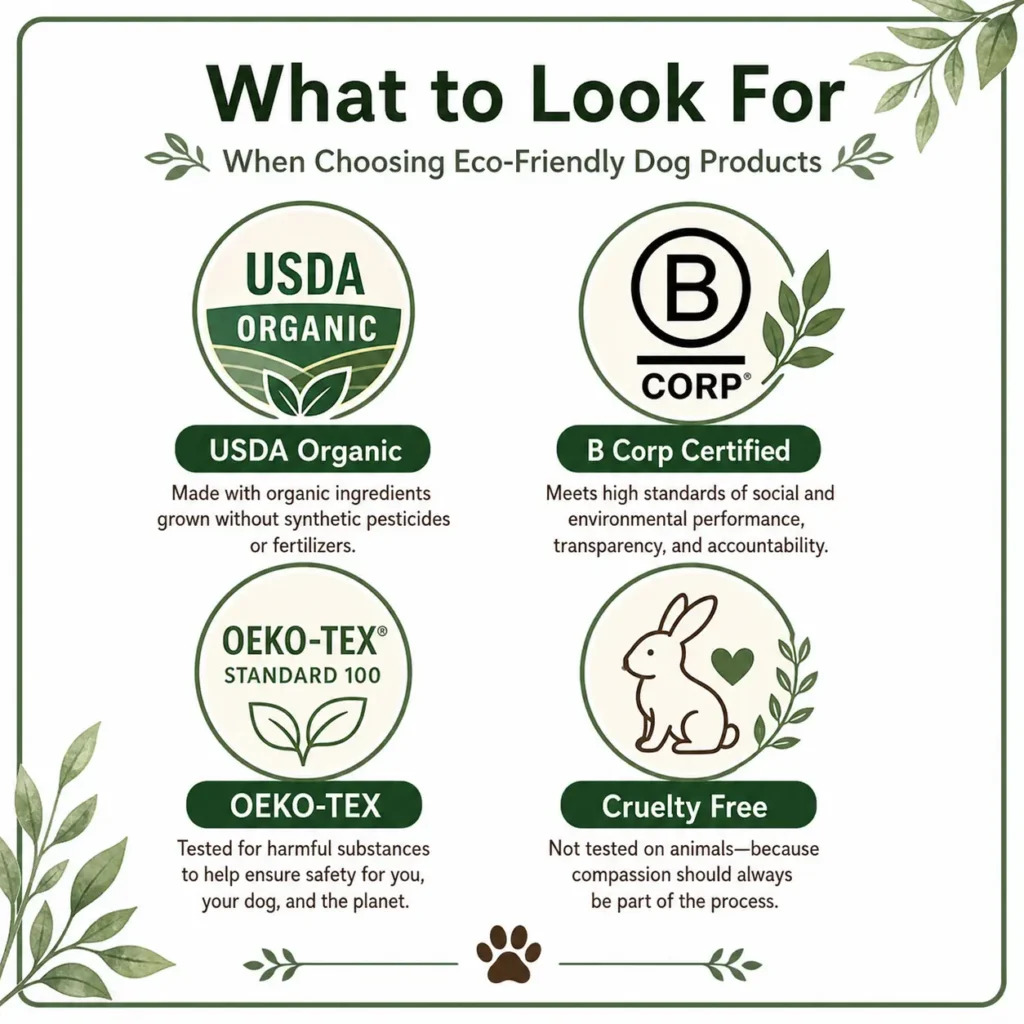
Third-party certifications are your most reliable tool because they require independent verification — a company can’t self-award them. The most meaningful ones in the pet product space are:
- USDA Organic — confirms raw agricultural ingredients (cotton, food crops) were grown according to federal organic standards. Strong for food and some grooming products, but doesn’t cover manufacturing or processing.
- GOTS (Global Organic Textile Standard) — covers both organic farming and manufacturing for textiles. More comprehensive than USDA Organic for beds, collars, and clothing.
- OEKO-TEX Standard 100 — tests the finished product for 100+ harmful substances. Crucial for anything that touches your dog’s skin.
- B Corp Certification — evaluates a company’s total environmental and social impact, governance, worker treatment, and transparency. Not product-specific, but signals deep organizational commitment.
- GRS (Global Recycled Standard) — verifies recycled content claims and chain of custody for recycled materials.
- ASTM D6400 / EN 13432 — the only certifications that verify compostability claims on poop bags and packaging.
You can verify most certifications through publicly searchable databases maintained by the certifying bodies — if a brand claims GOTS but can’t be found in the GOTS database, consider that a red flag.
Materials to Avoid
Beyond certifications, knowing which raw materials are problematic helps you evaluate products that lack formal certification:
- Virgin plastic — especially PVC/vinyl in toys and accessories; look for recycled alternatives or natural materials instead
- Synthetic dyes — can contain heavy metals and azo compounds; opt for naturally dyed or undyed products
- Virgin polyester fill — in beds and plush toys; prefer GOTS cotton, GRS-certified rPET, or GOLS latex
- Formaldehyde-based fire retardants — still found in some low-cost beds; prioritize brands that explicitly disclose fire safety methods
- Bamboo composites — while bamboo itself is a fast-growing, sustainable crop, many “bamboo” products (bowls, toys) are actually made from bamboo fiber bound with melamine resin, making them neither biodegradable nor truly eco-friendly
Greenwashing Red Flags to Watch For
Greenwashing is especially prevalent in the pet industry because regulatory oversight of eco-claims on pet products remains limited in the US. In 2026, consumer pressure and emerging EU-style regulations are beginning to raise the bar, but US brands still have wide latitude for vague claims. Watch out for these warning signs:
- Vague, unqualified language: “eco-friendly,” “natural,” “green,” or “sustainable” with no supporting evidence or certifications
- Green aesthetics without substance: leaf motifs, earth tones, and recycling symbols used purely as visual marketing devices
- The single-attribute trap: a brand highlights one eco-feature (e.g., recycled packaging) while the product itself contains toxic ingredients or the company has no broader environmental commitments
- Proprietary “blends” with undisclosed ingredients: especially in grooming and food products, where harmful compounds can be obscured
- No transparency on sourcing or manufacturing: genuine eco brands are typically forthcoming about where and how their products are made; brands that resist disclosure warrant skepticism
- Unverifiable “our brand is committed to sustainability” messaging without any certifications, third-party audits, or quantified targets
A useful litmus test: can the brand direct you to a verifiable third-party certification database? If not, their claims may be more marketing than mission.
Frequently Asked Questions
Are eco-friendly dog products more expensive?
Generally, yes — but the gap is narrowing. Sustainable materials, organic farming practices, and ethical manufacturing all carry real costs that conventional mass-market products externalize onto the environment. That said, eco-friendly products often deliver better value over time: a durable natural rubber toy that lasts months costs less per use than cheap plastic toys replaced weekly. For food, buying in bulk, choosing brands that use sustainable by-products, or transitioning to a partial plant-based diet can reduce the premium significantly.
What does biodegradable actually mean for pet products?
“Biodegradable” is one of the most misused terms in eco marketing. A product is only meaningfully biodegradable if it breaks down within a defined timeframe under specific conditions — without leaving behind harmful residues like microplastics. For poop bags, the only reliable standard is ASTM D6400 (US) or EN 13432 (EU) compostability certification, which guarantees breakdown in industrial composting conditions within 90–180 days. Products that claim to be “degradable” or “oxo-degradable” without these certifications may simply fragment into smaller plastic particles rather than truly decomposing.
Is organic dog food better for my dog?
Organic dog food offers genuine benefits in terms of what it doesn’t contain — no synthetic pesticides, chemical fertilizers, artificial preservatives, or GMO ingredients. For dogs with food sensitivities, dermatitis, or chronic digestive issues, switching to an organic, limited-ingredient diet can yield noticeable improvements. That said, “organic” alone doesn’t guarantee nutritional completeness — always look for an AAFCO statement confirming the food meets minimum nutritional standards for your dog’s life stage. And remember: any diet change should be made gradually and ideally discussed with your vet.
How do I know if a brand is genuinely eco-friendly?
The most reliable signal is third-party certification — specifically certifications you can independently verify through public databases. Beyond that, look for brands that publish detailed sustainability reports, disclose their ingredient sourcing, list their manufacturing locations, and set measurable environmental targets. B Corp Certified companies undergo rigorous, publicly available assessments of their environmental and social practices. Genuine eco brands are also typically transparent about their limitations and ongoing improvement areas — because greenwashers rarely admit to having room to grow.
Can eco products work for dogs with allergies?
Absolutely — in many cases, eco-friendly products are better suited for dogs with allergies. Conventional products often contain the very culprits behind allergic reactions: synthetic fragrances, artificial dyes, sulfates, parabens, and chemical preservatives. Natural grooming products formulated without these ingredients, organic cotton beds certified free from chemical dyes and treatments, and limited-ingredient organic foods with transparent sourcing are all smart starting points for allergy-prone dogs. For severe allergies, working with your vet to identify specific triggers before making product changes is always the safest approach.
Explore More from EcoPetHub
Ready to go deeper on any of these topics? Each section of this guide links to a detailed product roundup where we’ve tested and reviewed the best options on the market — so you don’t have to wade through greenwashing claims on your own. Whether you’re just starting your eco journey or you’re ready to overhaul your dog’s entire routine, there’s a sustainable, effective, and genuinely planet-friendly option waiting for you.
Explore more guides: Natural Pet Nutrition | Pet Wellness & Holistic Care | Zero Waste Pet Living | Sustainable Cat Products